
I wanted to summarize Part 2 of my travels. The trip to Spain and Portugal was the second half of my travel scholarship studies, the first part of the trip occurred in Italy, which I presented on last year. To the right, you can see a photos compiled from historic healing places visited in Italy which were so educational to visit, and inspiring. That trip taught me about historic hospitals and their ability to endure through time based on their value to their community in which they were effectively reused and maintained. Crucial to their preservation is their importance to the community based on religion, the use durable materials, and the conservation of important art like murals and frescoes.

I’ve always drawn to buildings that last, places of permanence, I am amazed at the idea that a built structure can withstand challenges and have cultural significance hundreds or thousands of years from the time it was used and built. I’ve brought up before how I thought in my early career that I might become a historic preservationist though my interest in the subject hasn’t changed. Many of the places I studied have been able to make it through some serious tests of time posed by war, political change, pandemics, natural disasters and now, climate change. My studies ask the question what is the secret to why some of the healing places last? During my visits, I concentrated in addition to understanding the history of the site, how healing waters, durable materials, connection to nature, and restoration and adaptive reuse contributed to these sites surviving all this time. The order in which I’ll present these sites is by starting with sites in Barcelona, touching on a hospital in Madrid, go through historic sites of I saw in the Andulucian region in the Albazin in Granada associated with the Alhambra and then discuss a historic hospital in Seville. Then I’ll continue to go over historic sites visited in Portugal. I want to apologize in advance for any mispronunciations, if you speak Spanish or Portugese please feel free to chime in. Also, this presentation has so many history facts that I couldn’t memorize it! I hope you all love history!
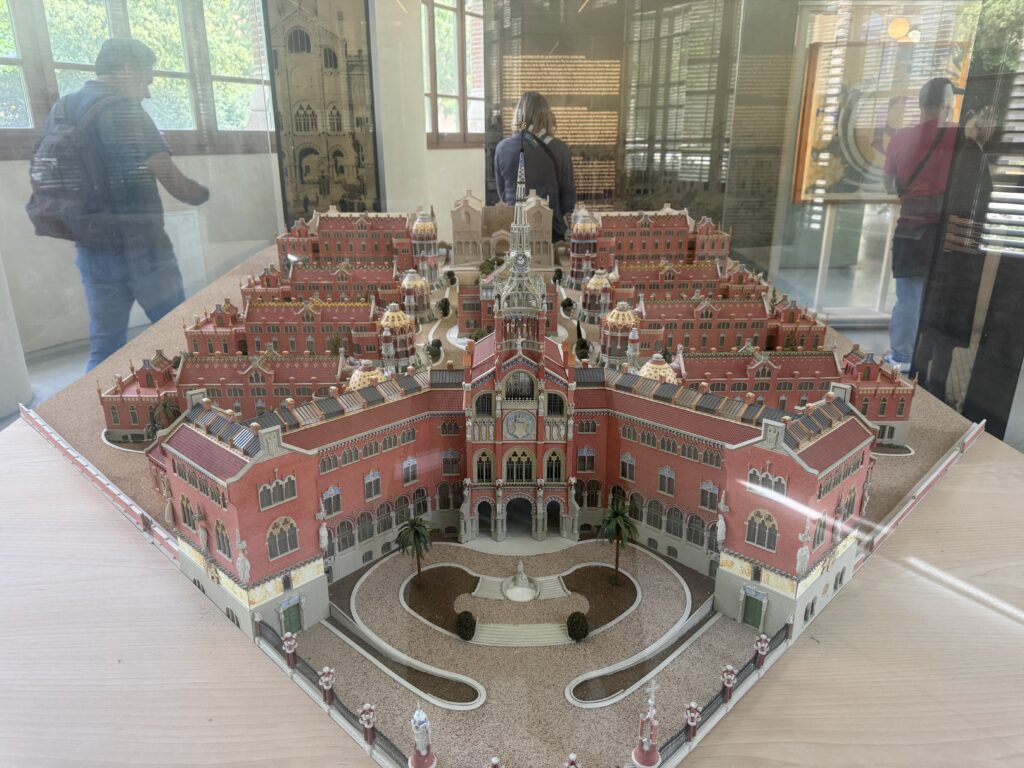
Hospital de la Santa Creu i Sant Pau, Barcelona, Spain
The Hospital de la Santa Creu I Sant Pau is an amazing historic hospital complex that is along a pedestrian, tree-lined avenue shared with Gaudi’s Sagrada Familia in Barcelona, Spain. Both buildings are endpoints to the Avenue de Gaudi, and the reason for this is that it’s architect Domenech I Montaner wanted to symbolically connect the axis of healthcare in the hospital with the spiritual renew in Gaudi’s Sagrada Familia. The group of 26 buildings constructed between 1901 and 1930, is a beautiful Art Nouveau project that is a cultural masterpiece of Catalan Modernism and since 1997 has been a UNESCO World Heritage Site. It takes up the equivalent to 9 city blocks in area, and was thought of as its own small city (“city within a city”) at the time of development.
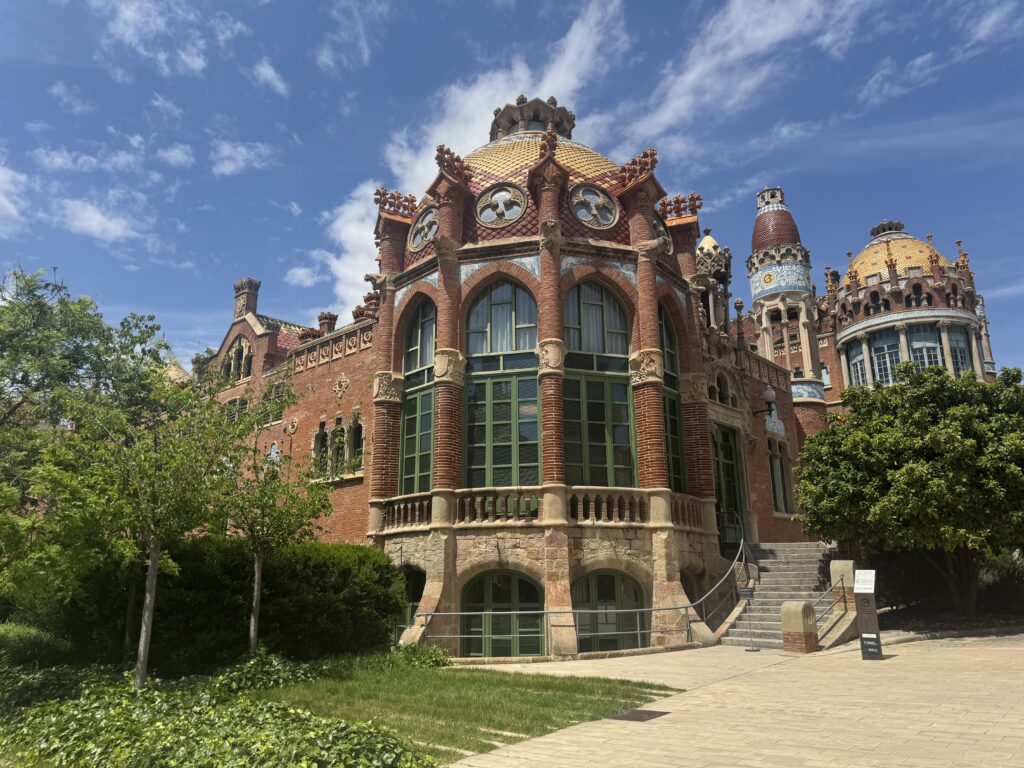
- brick with arched ornamented windows and mosaic and tile inlays that are stunning. Clock tower on center with a cross atop, with stonework as ornate as a Cathedral
- In laid mosaic paneling is work of Mrio Aragliana and Frances Laborta showing several parts of hospital’s history.
- Buildings on central axis
- Sunken courtyards and also raised platforms
- Between the buildings, courts form with a landscaping in the pavers and a tree-lined appearance that makes an inhabitant forget they are residing in a City. Special design attention to ventilations, sunlight and connection to nature via its gardens.
- Actually, Hospital Santa Pau i Creu served as a hospital up until 2009!
- Inside, gorgeous mosaic domes featuring ceramic tile designs and shine and soar.
- The design included rich decoration including stained glass, mosaics, reliefs, sculptures, and paintings. The ceilings were very ornately designed, not left without thought and intentional design because Montaner was very aware that most patients would recover while on their backs and would benefit to being exposed to beautiful designs overhead.
- The design involved large windows, which showcased garden views and brought in natural light into the Hospital to aid in a healing environment for its occupants. Themes in the design that were instilled in the buildings were of rebirth, regeneration and healing.

As a first-time visitor, I can say that the size and scale of this was truly astounding but the unifying design elements that make the Hospital a cohesive whole are unmatched by any other making this site a truly awesome place inside and out. Barcelona was lucky to have both Montaner and Gaudi in its ranks as architectural geniuses helping to form the City’s identity and unique beauty.
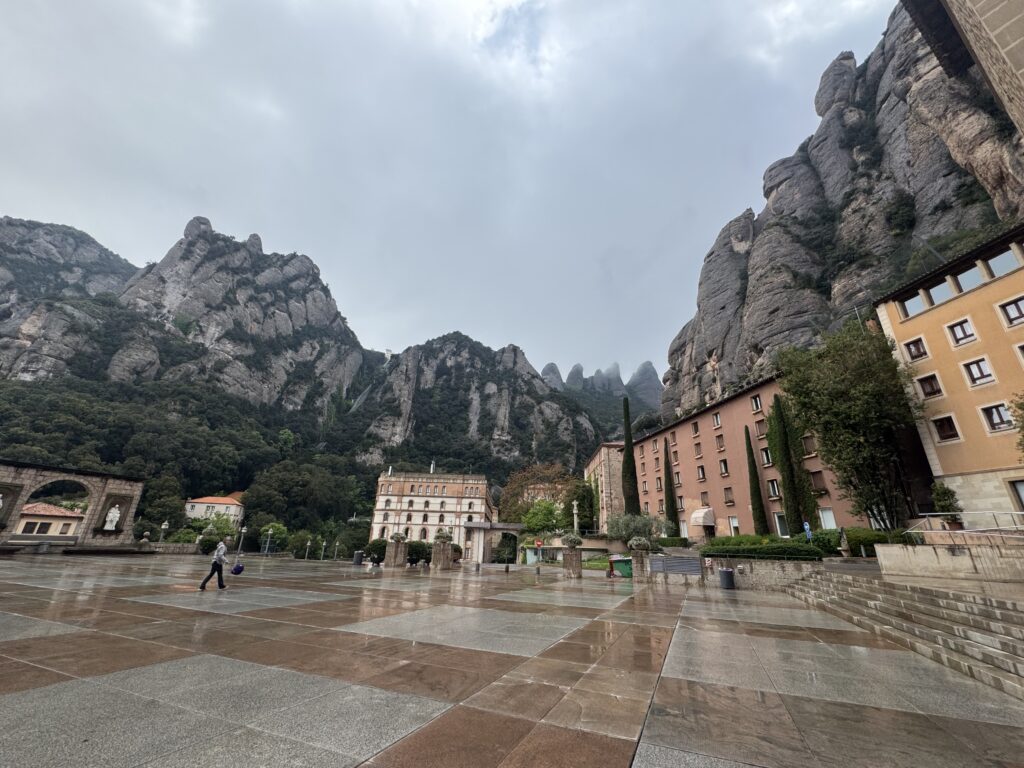
Monserrat, outside of Barcelona (image above)
While in Barcelona, I also visited the Abbey of Monserrat Montserrat
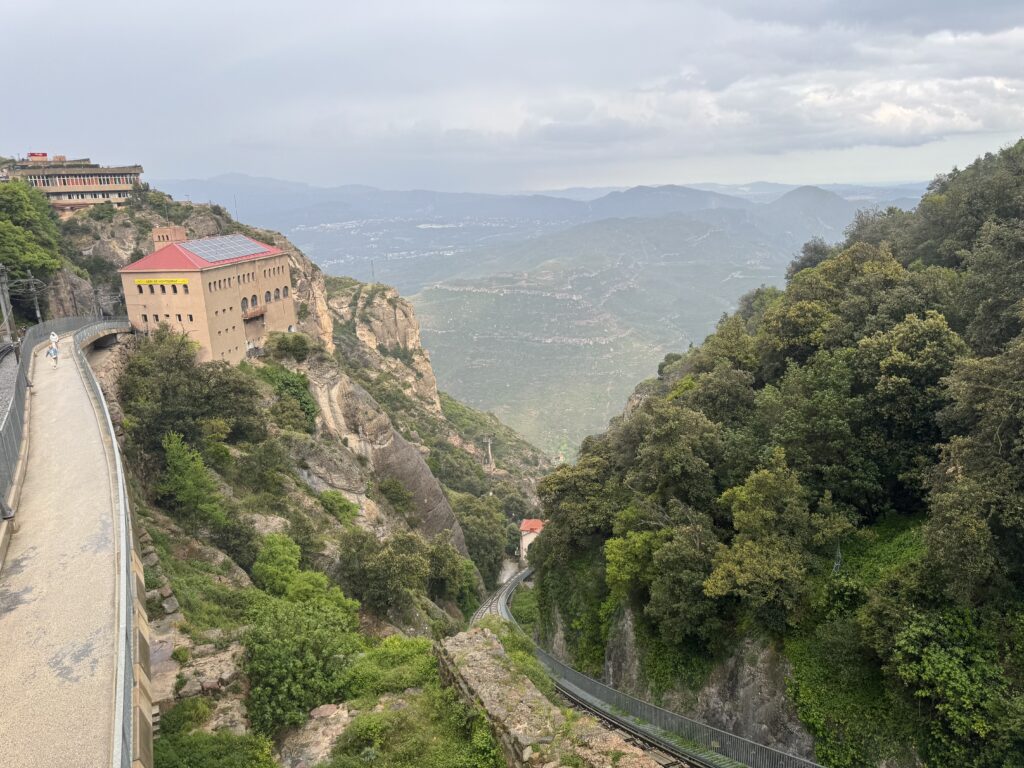
- Montserrat is a mountain and a Benedictine Abbey, and is a working monastery where famously the Boy’s Choir Escolania performs.
- After taking a train about an hour from Barcelona to access this scenic mountainous area, visitors get a choice between taking a cogwheel train or a cable car up to the Abbey . While I was on the train it was raining and I didn’t have an umbrella. But miraculously, by the time I reached the summit of Montserrat at the Abbey, it had stopped raining and I could appreciate the expansive views I looked all around me at the vast canyon and felt at harmony and peace with the world around me, as I was dwarfed by an amazing natural landscape of the most unique rock formations I had ever seen with serrated peaks that are truly breathtaking.
- No wonder this area was designated a National Park in 1987 as its beauty attracts many visitors.
- Montserrat is a peaceful oasis outside of the City, that provides quiet, connection to nature and is a place of mystery surrounding the miracles associated with the site.
- This site has a history of over 1000 years and is a well-known pilgrimage site to see the admired Black Madonna, . The legend is that shepherds found the Black Madonna in a cave on the mountain in the 9th century and with it being too heavy to move, it was decided to leave it where it was found and build a church around it. Visitors believe touching her outstretched hand will lead to the healing miracle. but her outstretched hand with an orb.There is an associated Basilica and a church associated with the site, and there is also an area on site to light a candle in prayer.
- The history of the Monastery itself came after the hermitage of Santa Maria where it was sustained until 1025, when the Abbot of Ripoll founded the monastery to receive pilgrims and spread the word of miracles. In 1409, it became an Abbey, and in the 1800s it became a cultural and musical center for composers.
- There is an open, expansive courtyard called the Atrium of Abbot Argerich which has arches leading to the area, sculptures like the 12 apostles with Jesus on the facade, shrines to significant Christian Saints and a marble floor that is like the floor at the Capitolium of Rome,
- I include this site in my studies because it is a Monastery and there is a long history of the Catholic faith being founded on caring for the poor, the sick and those in need. The Monks seek to heal people mostly by providing spiritual care and healing, but also learned about human antimony. Monasteries also provide a holistic approach to healthcare involving the physical and spiritual. Infirmaries at Monasteries cared for the sick and dying and at different points in history, and have served as hospitals for the community.
- Overall, I’d recommend a visit or pilgrimage to the site of Montserrat to enjoy the beautiful landscapes, and to allow space in your life for reflection and renewal, which can serve as a healing journey.

El Banuelo, Granada, Andalucia, Spain (neighborhood: Albaicin)
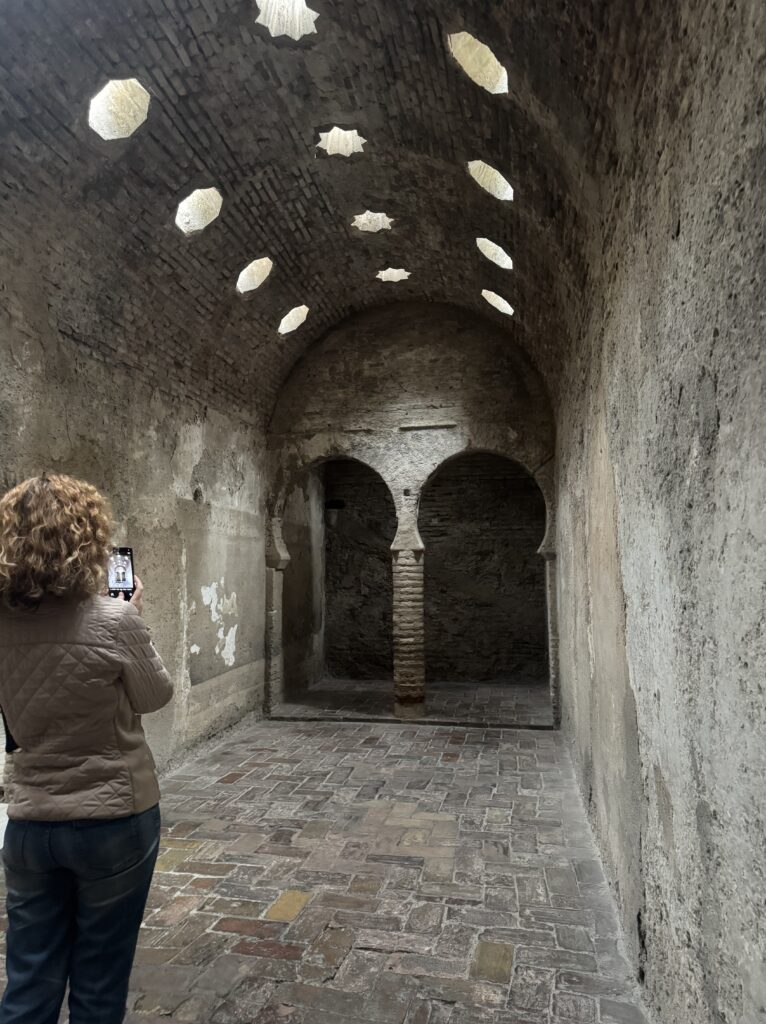
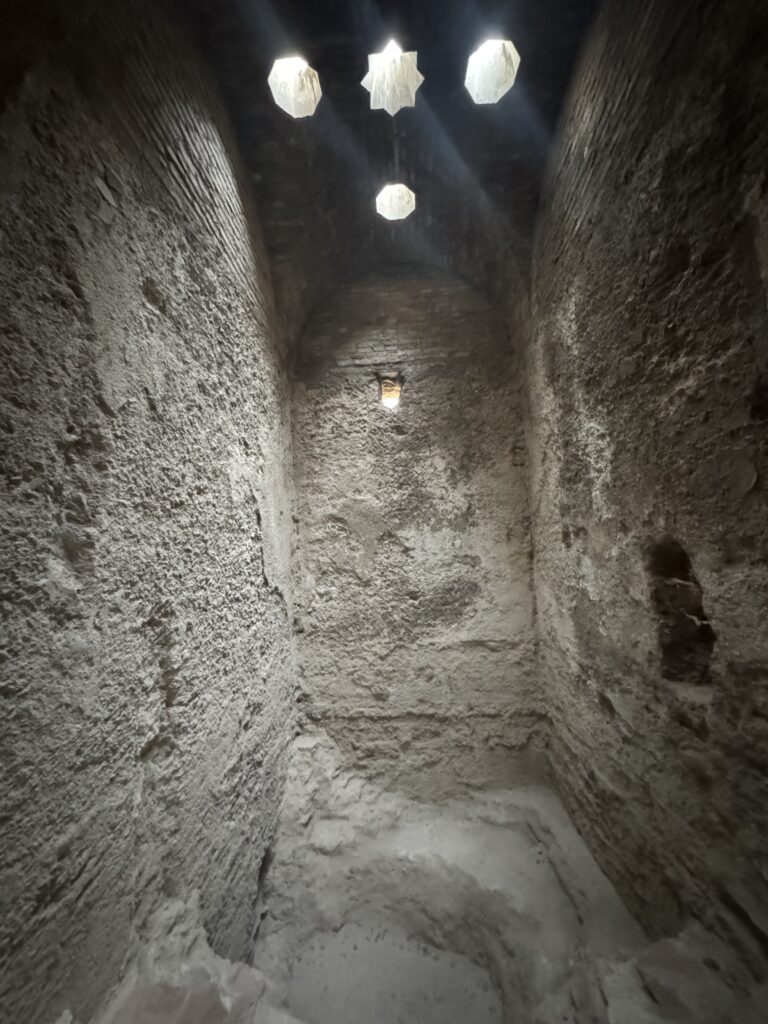
- At the base of the Alhambra and Generalife, sites the associated preserved UNESCO sites of the lower Albaicin. Two I visited were El Banuelo, the best-preserved hammam from Al-Andulus on the Iberian Peninsula and El Maristan which was a historic hospital.
- El Bauelo , is the oldest civil building of Muslim Granada. The site is a public arab bath served as a place where physical and spiritual cleansing happened daily between the 12th – 16th century.. This was one of the few buildings spared from destruction of the Christian Monarchs, and now has been a UNESCO site since 1994 thanks to extensive preservation efforts. This Hammam during the time of Al-Andalus, had 21 arab baths. The baths have a traditional order in the chambers, frigidarium (cold) , tepidarium (warm) and caldarium (hot) which are baths of varying degrees of increasing warmth from cold to hot, sequentially. The most striking and beautiful part of this building is the pierced skylights of stars and octagons on the vaulted ceiling which resemble constellations in the sky. This also allowed for ventilation of the bath spaces, as well. The arched colonnades form rooms within the Hammam, separating areas from one another, the columns are topped with capitals with motifs from Roman, Visigothic and Caliphase origins. The act of bathing oneself at a Hammam consisted of purification of the body through the baths and providing hygienic care. But outside of just hygiene, the baths provided a space for social, political and business meetings in Granada as one of the main public buildings of its time.
- I felt transported back in time as the neighborhood provides a look back on Granada’s rich past, it’s medieval labyrinthine streets, the courtyard villas and preservation of its Islamic heritage. There is a strong sense of community and culture of a village in the Albaicin, where a visitor can take in a panoramic view of the Alhambra from below.
El Maristan, Granada, Andalucia, Spain (neighborhood: Albaicin)
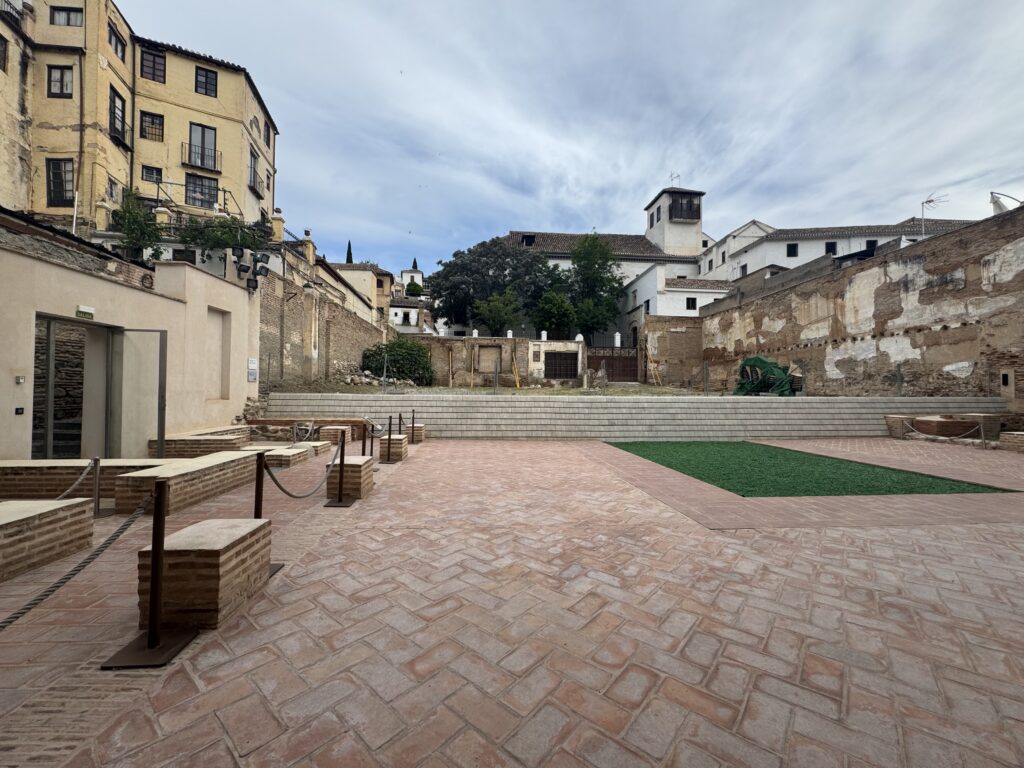
- Another of the historic UNESCO sites of lower Albaicin is El Maristan which is the Historic Hospital founded during the 14th century (1365-1367). It was founded when a Nazari sultan, Muhammad V (the eight monarch), established the city’s first hospital at the foot of his palace, the Alhambra.. It is a 2-story brick building with a central courtyard, used for medical care to care for the mentally ill, made it the first of its kind in Europe and influenced the development of other similar facilities after its founding. It was then used for a variety of purposes, for example as a mint, convent and then a state prison. It was demolished in the 19th century (1843), and because of this the site resembles today an archeological site, the building’s living spaces accommodated 200 patients, in 26 rooms on the ground floor .
- Maristan, is “poorhouse,” and it is associated with original use of this place to serve the needy and the poor.
- Archeological findings show that there was also decorative tilework, and marble at the site. The facade had a very ornamented entrance, which was arched and had arab motifs.
- The building was built using a rammed earth, earth and lime mortar, technique on a masonry base.
- The garden and central courtyard had a fountain, regularly seen in Moorish architecture, and it would have been a great respite to sick patients in the facility to provide fresh air, daylight and connection with nature that can aid in their recovery, accompanied by the sights and sound of the 2 lion statues, who served as guardians of the facility, spouted water from their mouths into the central fountain/pool.
Hospital de Los Venerables, Seville, Spain

- The Hospital de los Venerables, in Seville was founded in 1675 by Justino de Neve, was built to care for elderly, sick and dying priests.
- It is a 2-story, baroque building that is within the historic old town of Seville. The original architect is Leonardo de Figuiroa who was very influential in establishing the fundamentals of the Baroque Sevillian style.
- There is a central courtyard with a fountain recessed by surrounding circular stairs which are decorated with tiles, there are stairs on each side (also decorated with tilework) of the courtyard for getting up to a walkway adorned with bright tilework that is lined with columns topped with arches. There are orange trees planted in the courtyard which add a lot to the natural connection one can feel within the outdoor space/garden.
- There is an associated church built in 1689 that has a vault with frescoes which are artwork of Valdes Leal. The main alter is by Lucas Valdes and there are works by Virgilio Mattoni and sculptures by Martines Montanes.
- As I entered the church, it was so grandiose and ornamented and majestic. 3 stories with a rounded dome, it has decorative plasterwork painted boldly and ornately, along with emblems, niches with sculptural artwork and , guilded gold looking arched altarpieces with statues within them.
- There, was the golden organ also ornately detailed with an equally detailed confessional area below
- There was a small room off to the side which had a frescoed ceiling and stained-glass windows and tile up until the top of the doors. The tile was different than that at the courtyard, was very geometric, very detailed and reflected light off the surfaces. The furniture was set up on a pedestal to protect it from damage.
- The stairs leading to the second floor had a domed roof with geometric patterns and carvings of what appeared to be leaves and fruits, and below the wood carved ring at its base, was a dark (plasterwork) artwork carving of cherubs faces looking down from the heavens. Upstairs was a more restrained space, with artwork that lined the hallways
- This site has unlike most historic hospital I visited become a mainstream, popular tourist attraction, it could be that it is because of its quality, pleasant surroundings and famous artwork or because of its central, well-populated convenient location. But it could be both!
Hospital Sao Jose, Lisbon, Portugal
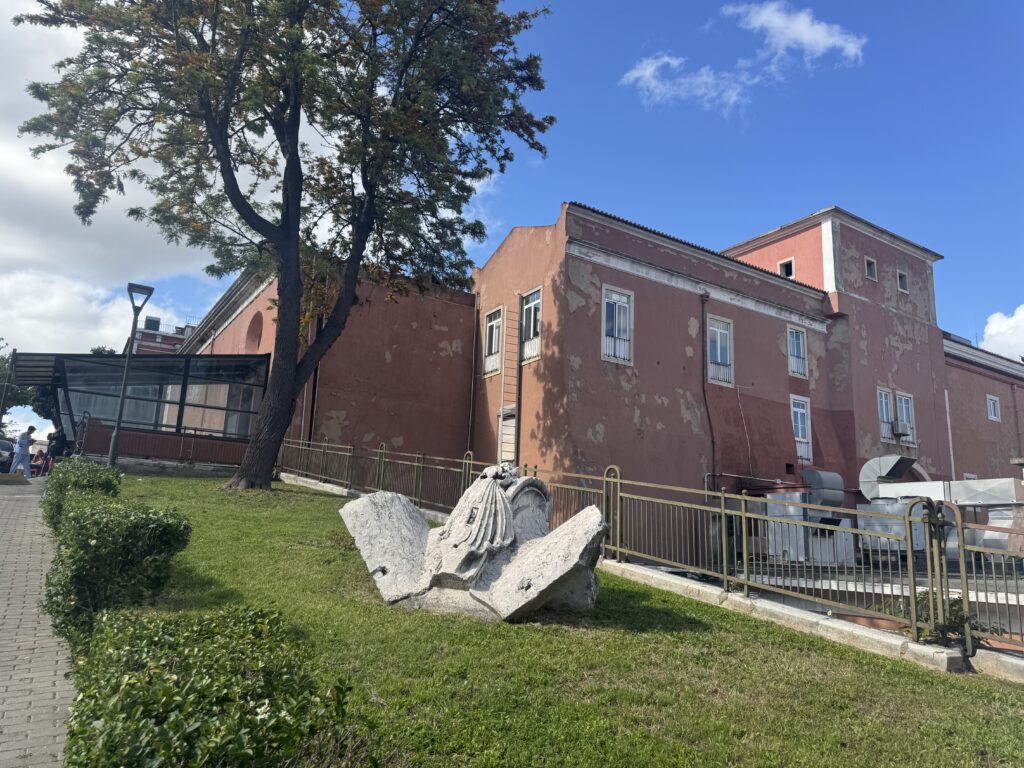
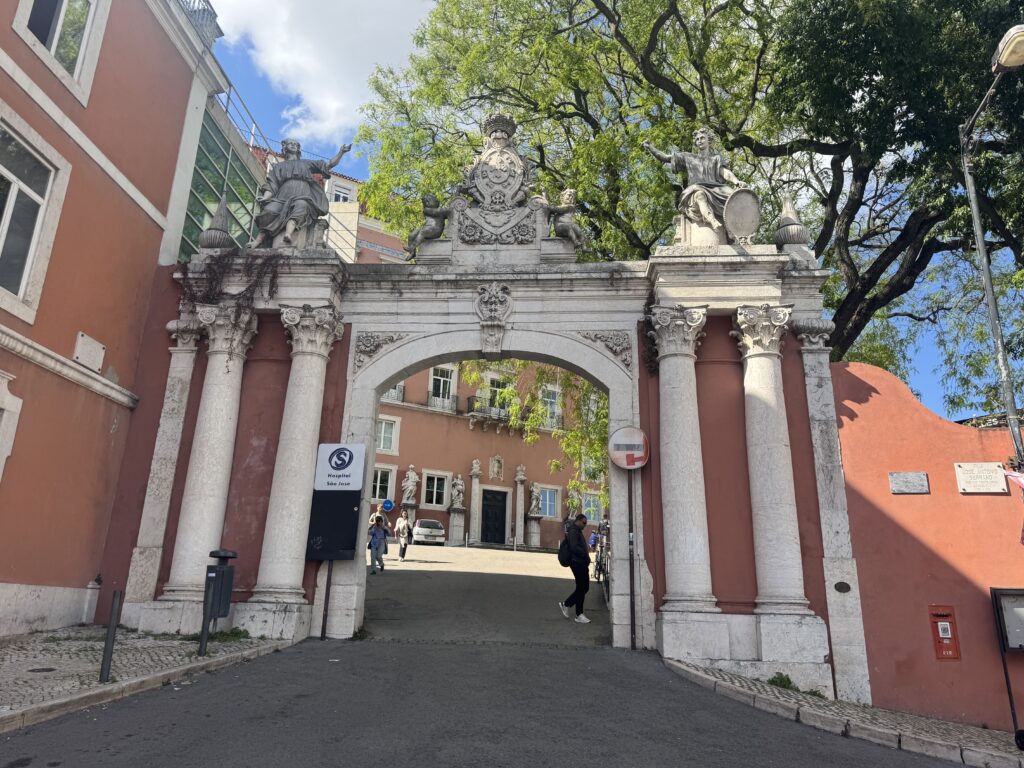
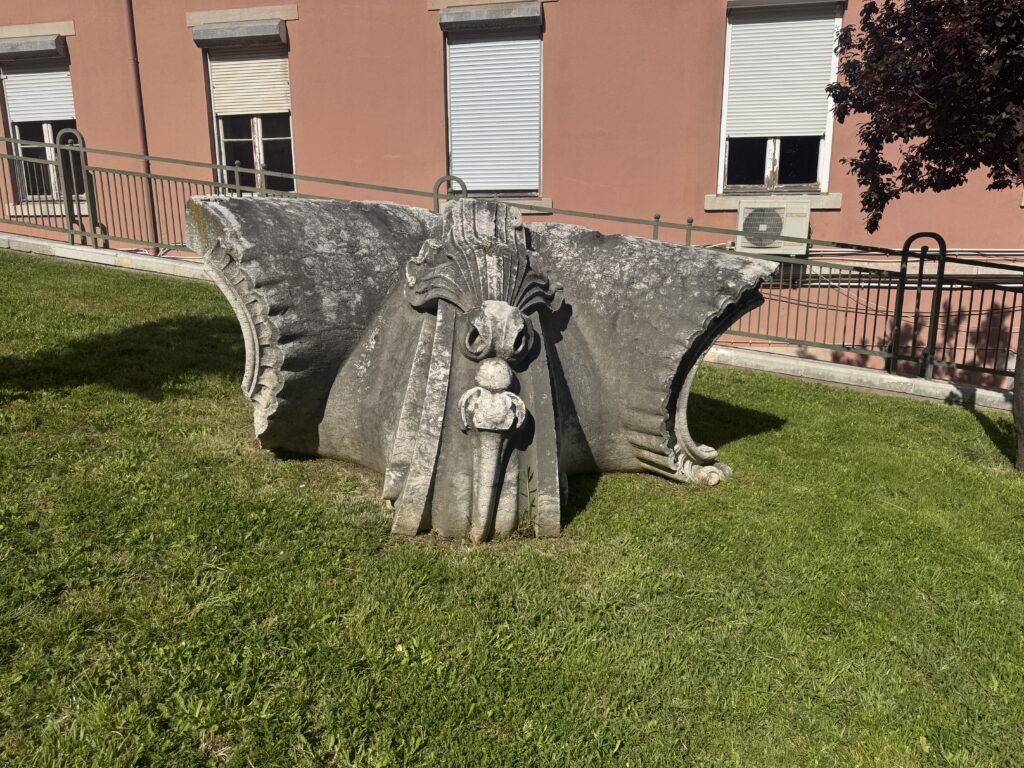
First site visited in Portugal
- The Hospital de São José, has a history that dates back to 1579 when the construction of the building was ordered by Cardinal to be a college, In 1755, there was a high-magnitude and disastrous earthquake and subsequent tsunami and firestorm that hit Lisbon, causing damage and killing many inhabitants of Lisbon.
- The Hospital of the time, Royal Hospital of All Saints was majorly destroyed so all the patients were relocated to the college building location, and it was converted soon after that to be the Hospital de Sao Jose. The Jesuit college was donated to All Saints’ by royal charter. Like Saint Joseph’s, this new Hospital became Portugal’s greatest School of surgery.
- In 1844 thru to the beginning of the 1900s, many hospitals in the area were moved to become institutionally combined with Sao Jose. This includes Rilhafoles Mental Asylum, The Desterro Hospital, Hospital de Dona Estefania, Hospital de Arroios, Hospital de Santa Marta, and the list goes on… The Hospital then became the “Civil Hospital of Lisbon,” and officially became Hospital de Sao Jose in 1775. It wasn’t until 10 years after the earthquake, that Marquis of Pombal determined that Sao Jose Royal Hospital would substitute the All Saints Royal Hospital that had collapsed.
- This building now still serves its community as a major teaching hospital with the NOVA Medical School training the next physicians of the future
- It was of interest that this building which had parts of it survive the major earthquake and was constructed using institutional means of construction that uniquely made it able to be adapted from a University to a Hospital.
- It’s hard to find a building more than 250 years old, because the buildings that are older are a rare survivor after the Earthquake of 1755.. Since the Hospital Sao Jose is up on the hill, it was not as impacted by the Tsunami the slope protected the Hospital.
- There is some original plasterwork pediments preserved, but the facility as it stands today is a combination of historical and modern constructions.
- Colegio de Santo Antao-o-Novo was not damaged by the fires that followed the quake because it was located far from the city center, where the fires caused most of their destruction.
- As I walked around the site, I noted that portions of the arched gate were likely very historic and at least a couple of centuries old since it was Baroque style. Other than that, I only identified that the stone remnants scattered on the grounds of the Hospital are likely preserved to represent the original structures and materials of the Jesuit College of Santa Antao-o-Novo.
- It is also clear how important vestiges of the past were to the people of Lisbon, that they worked to save, incorporate and preserve as much as possible the materials into structures that still survive today.
Centro Hospitalar Nossa Senhora de Nazarre, Portugal
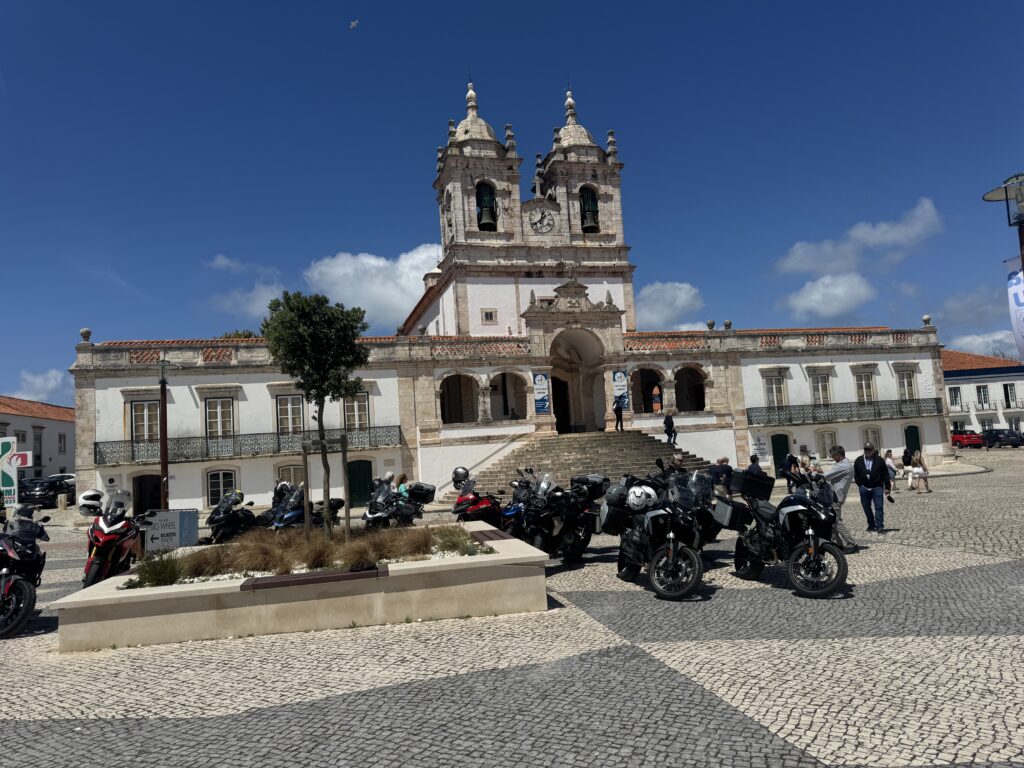
Centro Hospitalar Nossa Senhora da Nazaré
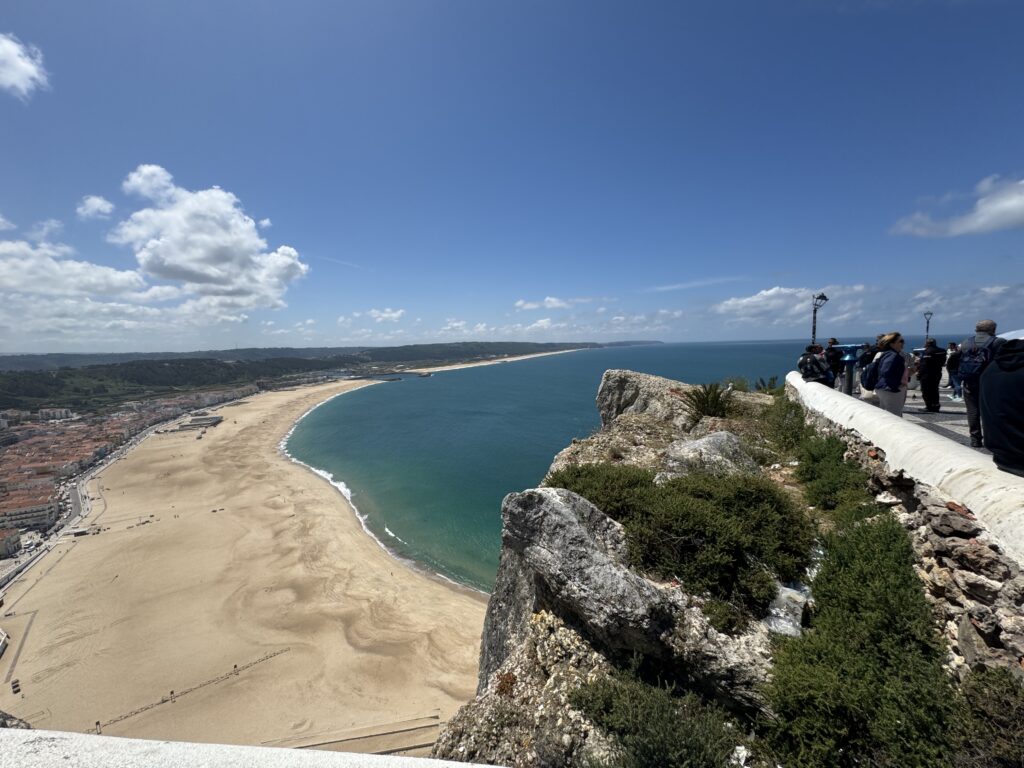
- Nazaré, a small fishing village on Portugal’s west coast, has gained worldwide fame for hosting some of the largest and most powerful waves ever surfed. Average height of waves is 50-65’high but one surfer hit record-breaking wave height of 101’ surfed by Rodrigo Koxa in November 2017, earning him the Guinness World Record for the largest wave ever surfed.
- But as our tour bus pulled into Nazarre, the first thing we saw actually was the historic hospital, much to my amazement.
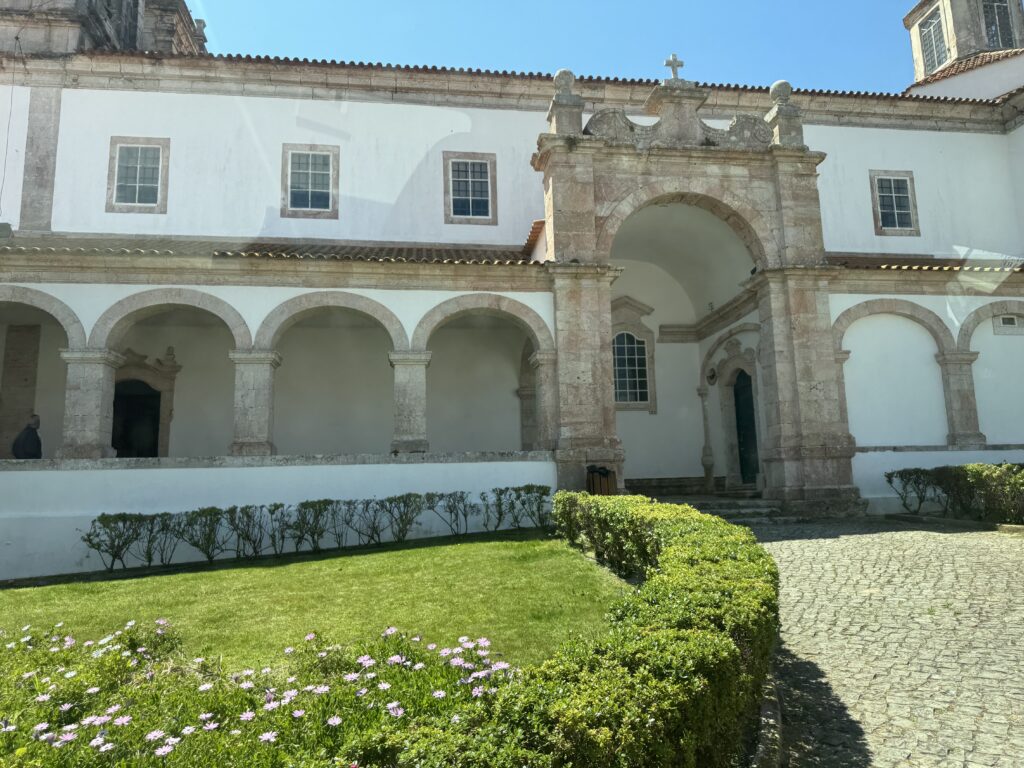
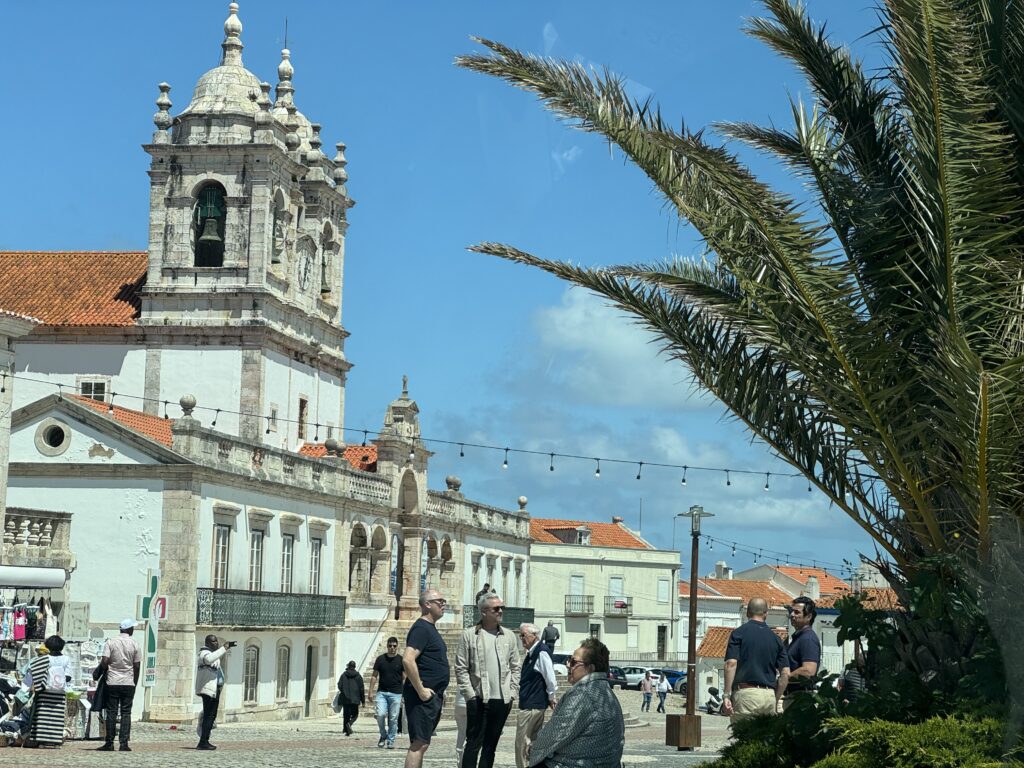
- The Hospital, is attached to the Sanctuary of our Lady of Nazareth which is an astoundingly beautiful structure. The church was founded during the 14th century during the Pilgrimage of King Ferdinand. He ordered it built to accommodate the larger numbers of people who wanted to come to pray to Our Lady of Nazare.
- King Manuel later renovated the church to add semicircular steps that go up to Baroque portal which sit majestically below two square bell towers.
- In 1708, much tilework was done to adorn the Church by a Dutch artist/ceramist Williem Van der Klöet. Interior to the nave, which is in a high-cross plan, in addition to the golden altarpiece there are corridors of the Sacristy were covered with blue and white tiles by the Portuguese master António de Oliveira Bernardes in 1714. Under the decorative aspe, a statue of Nossa Senhora da Nazaré sits in a lit niche above the main altar, which has twisted columns to each side. All this is under a coffered ceiling.
- As far as the Hospital itself goes, the project resulted from a conversion of a former Rector’s house into a Civil Hospital in 1877 and was designed by Francisco José de Sá.
- From that date until 1975 the hospital continued to grow, becoming one of the area’s leading hospitals. In 1975, the hospital came to serve the Nation of Portugal and became an inpatient unit. From that time the hospital now serves outpatient and consultative functions only.
- It currently has what they call an integrated continuing care unit, which has a rehabilitative and maintenance function to help with both acute and chronic conditions. Hospitalization can be accommodated within its doors from 30-90 days.
- The surrounding courtyard across from the church/hospital is very walkable, it is a very large square with a ferris wheel and a lot of small shops. The whole square also opens up to the surrounding landscape, overlooking the whole of the City of Nazare and the ocean with it’s massive waves below
Hospital Santo Antonio, Porto, Portugal

- The Hospital Santo Antonio in Porto is situated nicely across the street from The Garden of Cordoaria and near other institutional, well-preserved buildings. The site is well-connected to an activated area of Porto.
- The building is neoclassical and is three stories, and has a majestic, grand presence still today. Part of a block-long stone granite façade (which looks a dirty gray today thanks to pollution found in Porto), the entry has 5 arches above a grand staircase and rises to a colonnaded balcony with portico overhead. It resembles a classical temple in a way, the façade is well-proportioned, has flanking wings and has sculptures rising from its edifices. The hospital has a handsome façade with all windows having arched lintels, grand columns, extraordinary stonework including intricate detailing within the disciplined constraints of a classical design.
- This hospital has 250 years of history, The Hospital is designed by John Carr in the Palladian style, who also designed the Crescent in England, It is one of two main hospitals in Porto, the building shows Portugal’s strong relationship with the English.
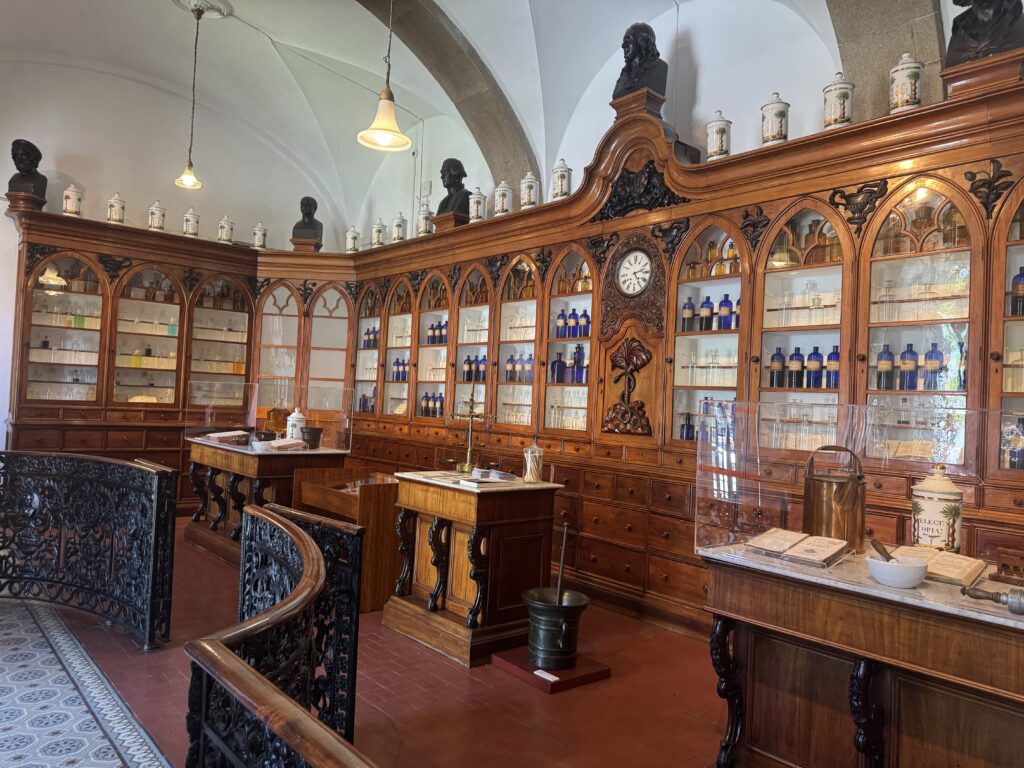
- I visited the historic pharmacy museum where the hospital used to dispense and manufacture its own medicines. At this museum you can learn about the history, pharmacology and sterilization techniques that were used at the Hospital.
- The care of the historic preservation of this Hospital speaks volumes about how committed Porto has been to its heritage, while also preserving a famous neoclassical building and all the while providing modern healthcare within its halls. This site is recognized as a National Monument since 1910., and remains today one of the most important architectural landmarks in Porto.
- Today the hospital is part of the Central Hospital of Porto where it provides specialized medical care, with departments in oncology and transplantation. Within its walls, many students receive medical education, training and perform research. Today is attached at the rear to a more modern facility which enables the hospital to integrate advanced technology like AI and robotics in surgery to strengthen care received at the Hospital to ultimately improve patient outcomes. The Hospital has thrived on its operations based on public service and continuous demand, and not-for-profit which allows it to keep open even if it doesn’t produce revenue from patient care.
Visiting these historic hospitals in Spain and Portugal was very inspiring and eye-opening, the sites were very different from one another but what they have in common is a resolute commitment to care of preserved structures.
Other commonalities found were:
- Historic hospitals are made of durable materials like stone and brick,
- They are valued by their communities for serving as monuments that keep alive important heritage through the preservation of their architecture, art, sculpture, mosaics and tilework that are characteristic of the region.
- They use connecting elements like courtyards and gardens that incorporate fresh air, daylight and connection to nature aid in patient’s recoveries.
- These places are, with the exception of Monserrate, very central and well-connected to their locale where they serve as important foundations to their City.
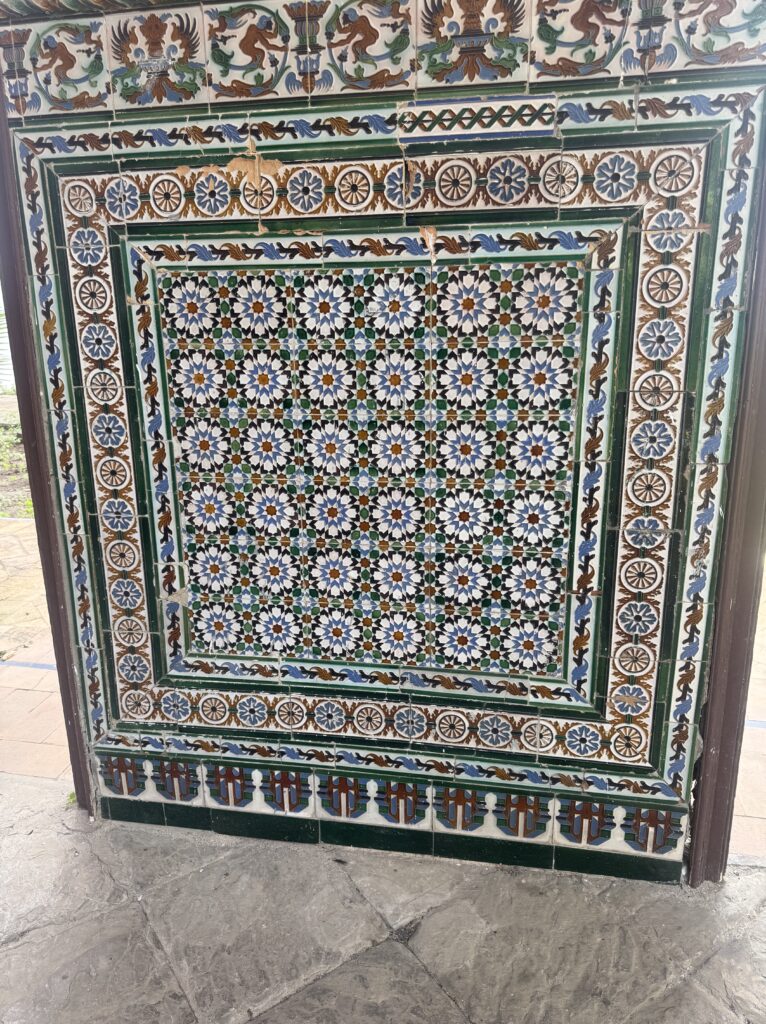
- I want to make a special note about Spain and Portugal and the very special tilework that can be found in this region. The tiles are called Azulejos which are glazed ceramic tiles that feature vibrant, hand-painted designs and adorn facades, churches and sometimes include historical narratives in their intricate patterns. These originate as an artform of geometric Moorish prevalent in south Andalucia near Spain’s Alhambra. The Portugese adopted the art and elevated it to a national art form there as well including them in large-scale narrative murals that serve as a visual history. I witnessed some of these very special tilework installations in the Alhambra in Granada Spain and also in Sao Bento Train Station in Porto, in addition to seeing them in many of the historic hospitals I visited.
document1